
Denver Water Damage: Immediate Steps & Emergency Guide
Learn how to respond to water damage in your Denver home, minimize property damage, protect your family, and know when to call a professional restoration service.
Water damage can occur at any time in a Denver home due to a variety of reasons including a broken pipe, a leaking appliance, a roof leak, or a sudden plumbing failure. In addition, Colorado's cold winters can cause pipes to freeze and burst, leading to large amounts of water entering into walls, ceilings, and floors.
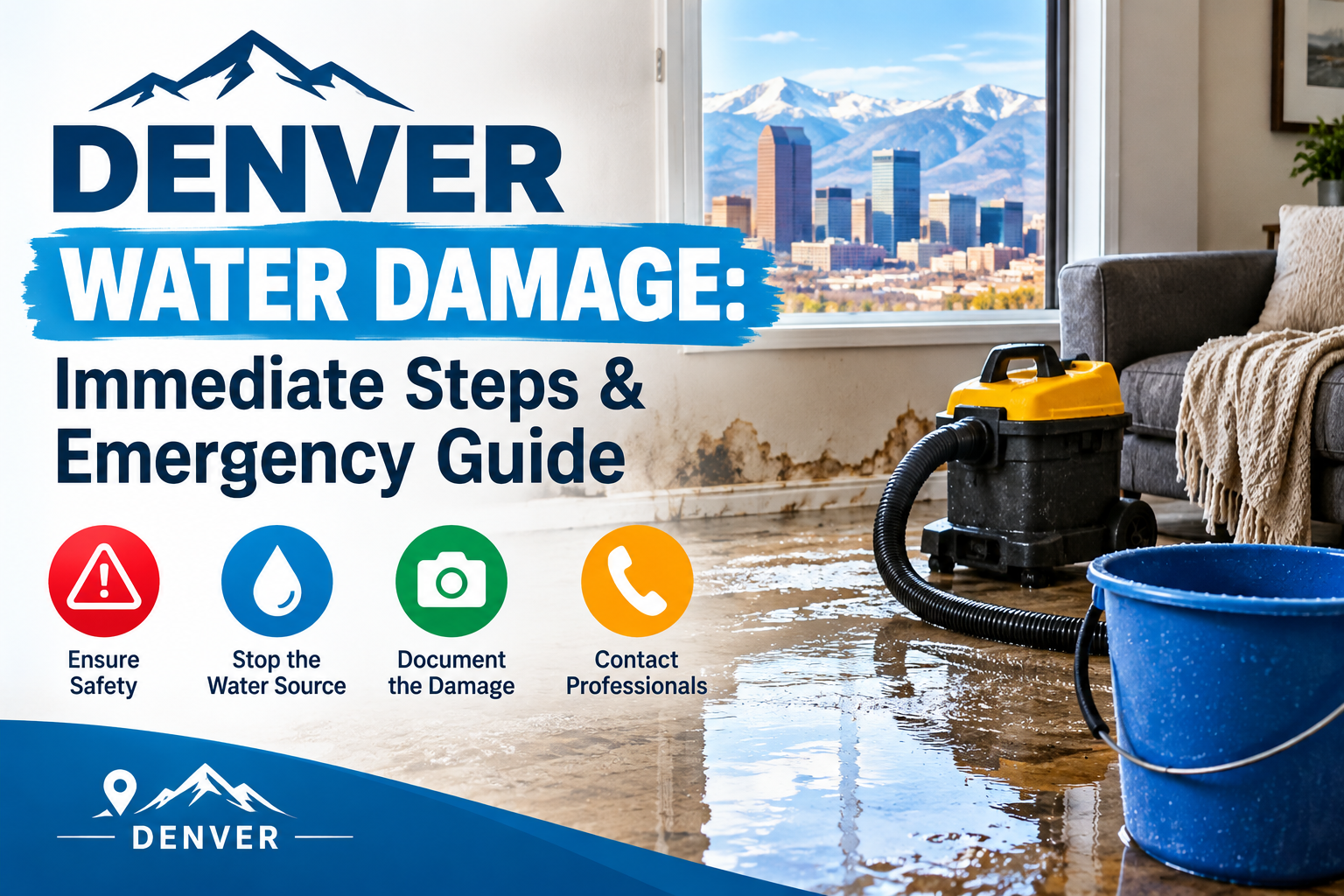
Knowing what to do immediately following water damage will assist in protecting your family, reducing damage to your property, and preventing secondary issues such as mold growth. The most critical steps are to ensure safety, stop the water source if possible, document the damage, and contact a professional
water damage restoration service.
What Should You Do First After Water Damage?
The first step after identifying water damage is to ensure that the area is safe prior to initiating cleanup. If there is water present near electrical outlets, appliances, or wiring, do not enter the affected area until a qualified professional has verified that it is safe.
Follow these steps to respond effectively.
1. Ensure Everyone Is Safe
Prior to moving furniture or removing standing water, assess the area for potential hazards.
Do not stand in water near electrical equipment or outlets.
- Leave the affected area if you observe structural sagging, ceiling bulges, or indications of collapse.
- Do not come into contact with sewage-contaminated water or water of unknown origin.
- Keep children and pets away from flooded areas.
- If you suspect an electrical hazard, do not walk through water to access a breaker panel. Contact emergency services or a qualified electrician as appropriate.
2. Stop the Source of the Water
If it is safe to do so, stop the water from continuing to enter your home. For a broken pipe or plumbing leak, turn off the appropriate water supply or your home's main water valve.
If the damage is caused by a roof leak or a damaged appliance, stop using the affected appliance and arrange for the necessary repairs.
Denver homeowners should be especially aware of plumbing issues during freezing weather. A broken pipe can quickly lead to additional damage to drywall, insulation, cabinets, and flooring if the water supply is stopped promptly.
Please note that stopping the leak does not eliminate the moisture that has already been absorbed by building materials.
3. Contact a Water Damage Restoration Professional
Standing water is only part of the issue. Water can travel beneath flooring, absorb into drywall, enter insulation, and accumulate within wall cavities.
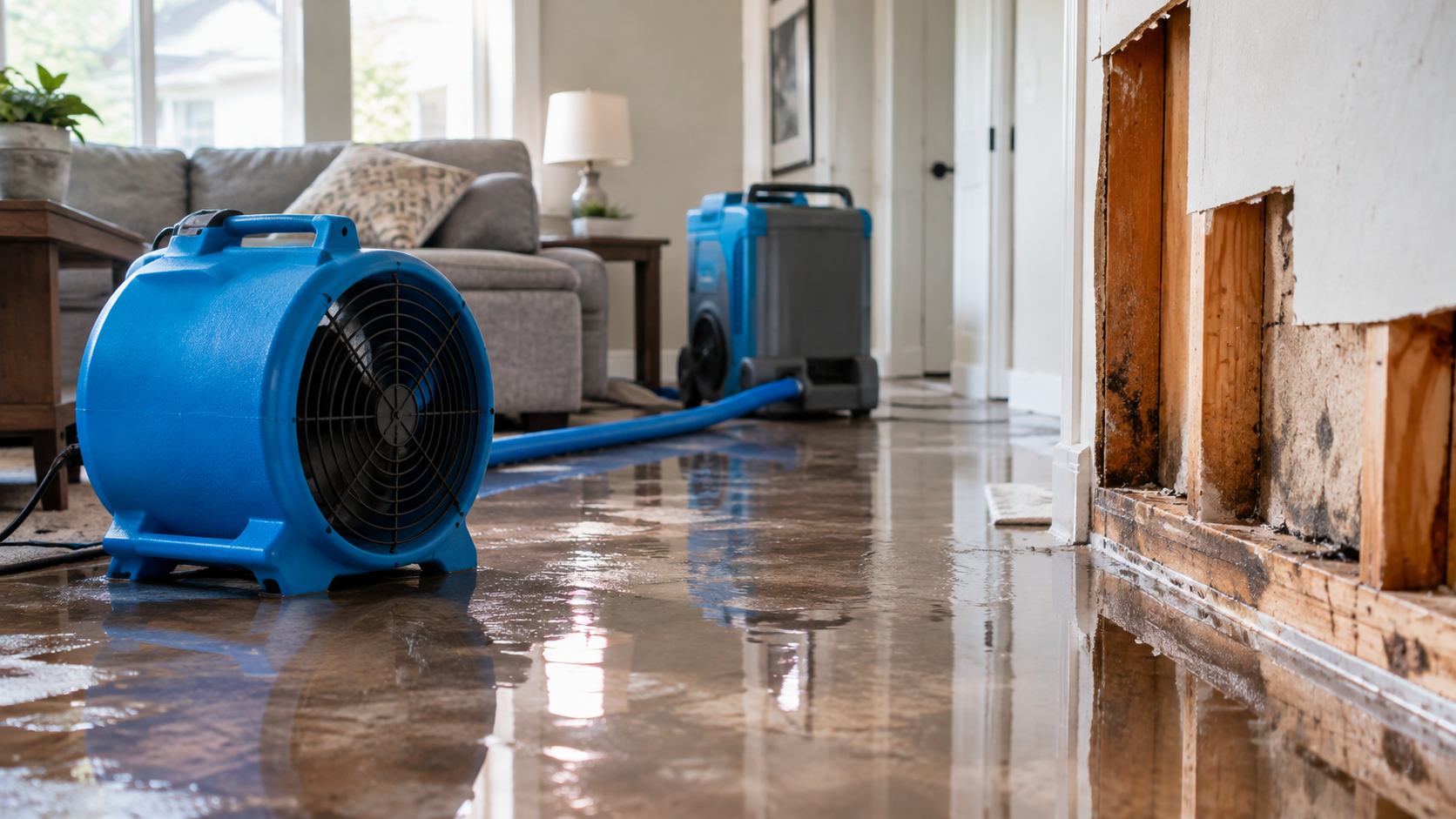
A professional water damage restoration team can evaluate the affected areas, identify moisture that may not be immediately apparent, remove standing water, and determine what type of drying or material removal is required.
Depending upon the circumstances, the restoration process may include:
- Water extraction using specialized equipment.
- Moisture mapping and inspection.
- Commercial dehumidification and air movement.
- Removal of materials that cannot be safely dried.
- Cleaning and sanitizing when appropriate.
- Repairs and reconstruction after drying.
Why professional drying is important: A room may appear dry on the surface; however, moisture may still be trapped beneath flooring or behind walls. Moisture measurements are used to determine whether materials have dried sufficiently.
4. Document the Damage for Your Insurance Claim
Take photographs and videos of affected rooms, damaged belongings, visible leaks, and standing water when it is safe to do so.
You should also:
- Record when the damage was identified.
- Retain receipts for emergency repairs and reasonable protective measures.
- Create a list of damaged personal belongings.
- Save communications with restoration contractors and your insurance company.
- Contact your insurer as soon as possible to understand your coverage and claim requirements.
Do not discard damaged items prior to documenting them unless doing so would pose a health or safety hazard. Follow your insurer's directions regarding inspections and evidence.
Coverage is based upon the cause of the water damage, your policy, and applicable exclusions. For example, sudden plumbing failures and gradual leaks may be treated differently.
5. Remove Excess Water Only When It Is Safe
If the water is clean and the area has been verified as safe, you may be able to move unaffected belongings, remove small quantities of water, or place protective barriers around dry areas.
However, do not use standard household vacuums to remove water. Do not operate fans, dehumidifiers, or other electrical equipment in wet areas unless their use has been verified as safe.
Floodwater and sewage backups require additional precautions because they may contain harmful microorganisms or chemicals. Professional evaluation is recommended for contaminated water.
6. Begin the Drying Process as Soon as Possible
Moisture left inside a home can damage materials and create conditions that allow mold to grow. Drying promptly is especially important when carpet padding, drywall, insulation, or wood flooring has become wet.
The restoration team may utilize air movers, dehumidifiers, and moisture meters to manage and monitor the drying process. Some materials can be dried and restored; however, others may need to be removed if they are contaminated, deteriorated, or unable to dry adequately.
Mold can begin growing within approximately 24-48 hours under ideal conditions; however, the actual timeframe varies based upon moisture levels, temperature, and material conditions. Do not wait for a musty odor or visible mold before addressing persistent dampness.
7. Check for Hidden Damage After Initial Cleanup
After visible water has been removed, examine the surrounding areas for signs that moisture has spread.
Be alert for:
- Discoloration on walls or ceilings.
- Warped wood flooring or swollen baseboards.
- Soft drywall or peeling paint.
- Musty odors.
- Damp carpet or lingering humidity.
- Water stains in rooms below the original leak.
A professional moisture inspection can help determine whether the affected area extends beyond what is visible.
Common Causes of Water Damage in Denver Homes
Denver properties can experience water damage at any time during the year; however, certain conditions merit special consideration.
| Cause | Why it matters |
|---|---|
| Frozen or burst pipes | Freezing temperatures can lead to plumbing failures and widespread indoor flooding. |
| Appliance leaks | Washing machines, dishwashers, refrigerators, and water heaters can leak into adjacent materials. |
| Roof leaks | Snow, ice, damaged shingles, and heavy precipitation can allow water into the attic and ceilings. |
| Basement flooding | Groundwater intrusion, plumbing failures, and drainage issues can affect lower levels. |
| Sewer backups | Contaminated water requires specialized cleanup and sanitation. |
The source of the water determines the appropriate cleanup, drying, and restoration methods.
Protect Your Denver Home With a Prompt Response
Water damage can extend beyond the location where a leak initially occurs. Acting quickly, documenting the damage, and arranging for appropriate professional drying can assist in minimizing further deterioration and making restoration more manageable.
If your Denver home has suffered from a broken pipe, appliance leak, roof leak, or flooding, contact a qualified water damage restoration professional for an evaluation. The sooner the source is controlled and moisture is addressed, the greater your opportunity to protect remaining materials and avoid preventable damage.
Need assistance after a water emergency? Contact our Denver water damage restoration team to evaluate the damage and determine the next steps for cleanup and recovery.
Frequently Asked Questions
How quickly should I call a water damage restoration company?
Contact a qualified restoration company as soon as possible after addressing immediate safety concerns. Early evaluation can assist in identifying moisture spread and determining which materials require extraction, drying, or removal.
Can I stay in my Denver home after water damage?
It depends on the severity of the damage. A small, contained leak may not require you to leave; however, extensive flooding, sewage contamination, electrical hazards, or structural damage may render the property unsafe. Follow guidance provided by qualified professionals and emergency authorities.
Will homeowners insurance cover water damage?
It depends on the cause of the loss and your specific policy. Some sudden and accidental water damage may be covered; however, flooding from outside, neglected maintenance, or long-term leakage may be excluded or subject to special terms.
How can I prevent water damage during a Denver winter?
Insulate vulnerable pipes, protect plumbing in unheated areas, maintain indoor heating, and know where your main water shutoff is located. During extreme cold, follow local utility or plumbing guidance for additional precautions.