
How Long Does Water Damage Restoration Take?
Learn how long water damage restoration takes, what affects the timeline, and how Denver homeowners can speed up drying and repairs.
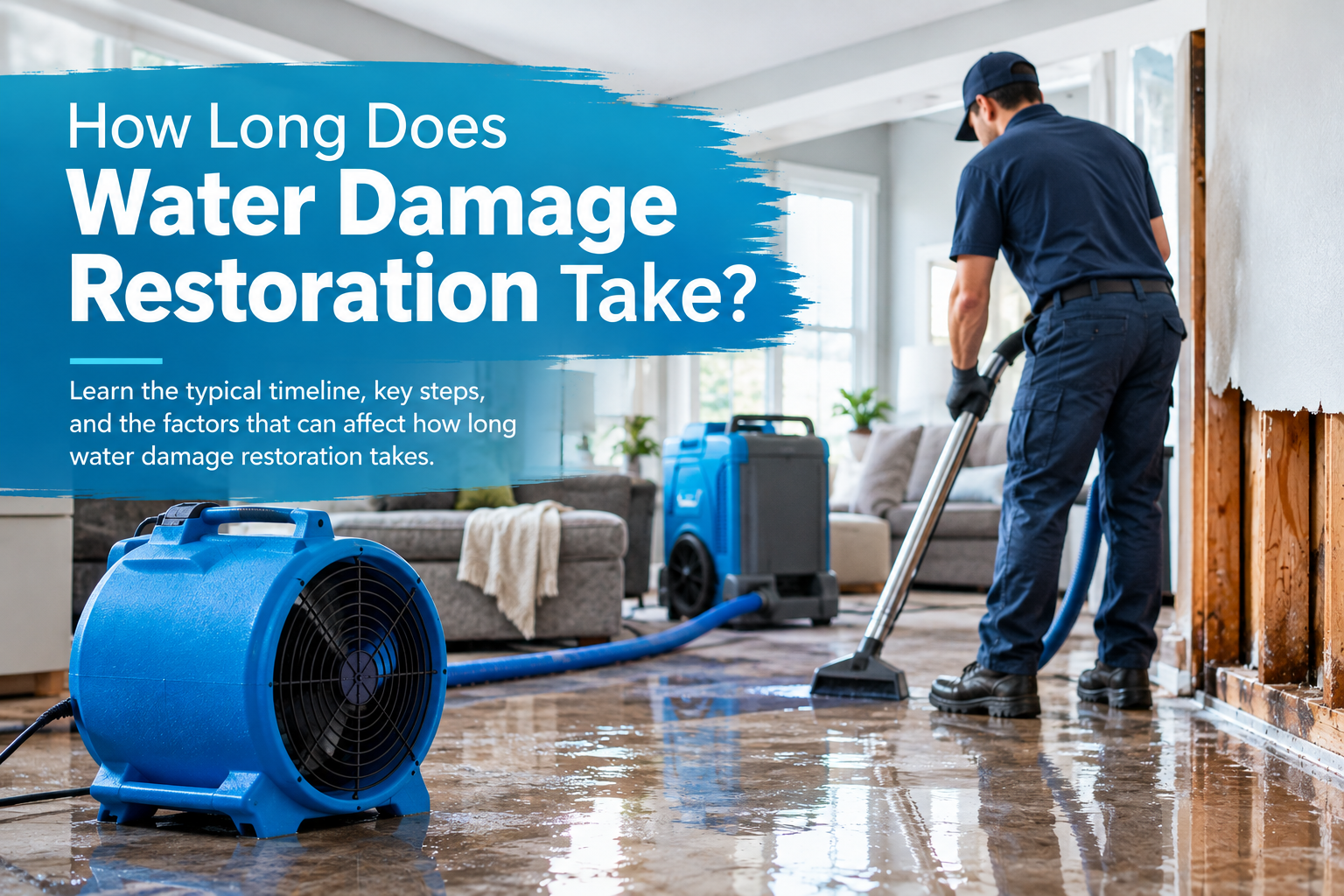
How long does water damage restoration? This is usually one of the first questions that homeowners ask after experiencing a leak or flood. The answer to this question depends on many factors including: how much water entered the property; what types of materials were affected; how quickly the water was removed; and whether repairs or mold remediation are needed.
Many residential water damage projects can take several days to complete the initial water extraction and structural drying; however, complete restoration can take days to several weeks or longer if extensive repairs are needed. A small, contained leak may be restored much quicker than a flood that affects multiple rooms, insulation, drywall, and flooring.
The source of the damage also plays a role in the restoration process for Denver homeowners. A burst pipe during a Colorado cold snap, a leaking water heater, or water entering through a damaged roof can each present unique challenges for restoration.
How Long Does Each Step of Water Damage Restoration Take?
Water damage restoration is a multi-step process rather than a single repair. Each step addresses a different issue from removing water to making the home safe and restoring damaged materials.
1. Inspection and Damage Assessment
A few hours (depending on the extent of the damage)
A restoration professional will assess the source of the water, evaluate the affected areas, determine if there are any safety concerns, and measure the moisture levels. If the damage is extensive or difficult to access, further inspections may be required.
2. Water Extraction
Several hours to a day or more
Pumps and professional extraction equipment are used to remove standing water. Large flooded areas, saturated carpets, and water trapped in lower levels can increase the amount of time required to extract the water.
3. Structural Drying
Typically 3-5 days (sometimes longer)
Commercial air movers and dehumidifiers are used to remove moisture from affected materials. The length of time required to dry affected materials depends on the amount of water present, the type of building materials used, the amount of airflow available, the humidity level, and how deep the moisture has penetrated into the materials.
4. Cleaning and Mold Remediation (if necessary)
A few days to several weeks
If the water was contaminated, if mold has developed, or if materials have been damaged, specialized cleaning, containment, removal, and verification may be required before rebuilding can begin.
5. Repairs and Reconstruction
Several days to several weeks (or longer)
Replacing drywall, insulation, cabinets, flooring, or other structural finishes takes additional time. Material availability, contractor schedules, permits, and insurance approvals may also affect the timeline. These are general planning estimates and not guaranteed completion times. Your restoration company will provide a more detailed schedule once they have inspected your property.
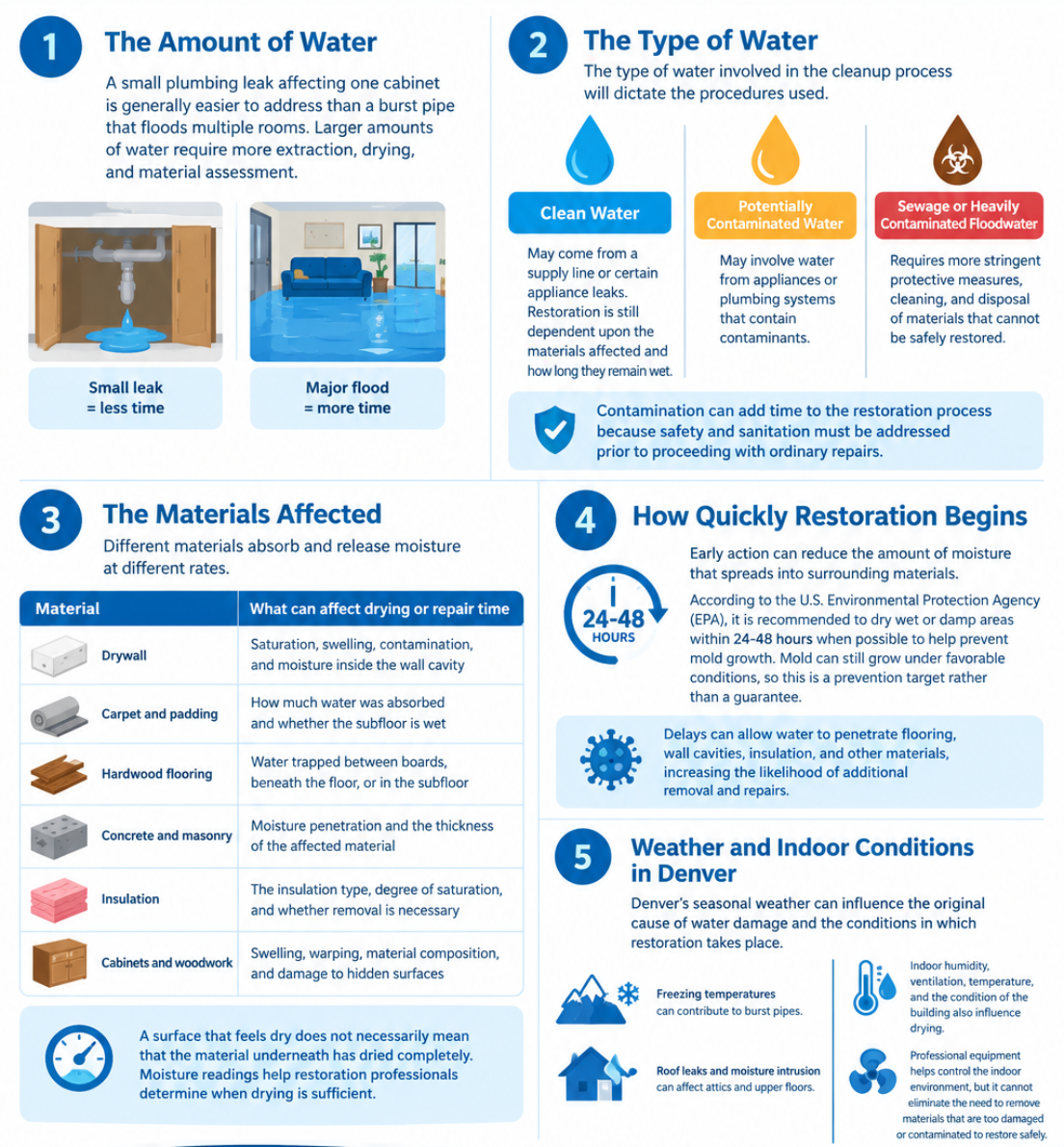
What Factors Affect Water Damage Restoration Time?
There are several variables that will determine how quickly your home can be dried and repaired.
Can Water Damage Restoration Be Completed in One Day?
Sometimes, but only for limited situations.
A small, promptly addressed leak that affects a small area of nonporous material may require relatively little cleanup. However, a flooded room with saturated drywall, carpet padding, or wood flooring is unlikely to be fully dried and repaired in one day. It is important to distinguish between removing visible water, completing structural drying, and finishing all repairs. These are separate milestones. Even if a restoration team removes standing water within hours, dehumidification and moisture monitoring may continue for several days.
How Do You Know When Your Home Is Dry Enough?
The absence of puddles or damp-looking surfaces is not enough to confirm that restoration drying is complete. A professional may use moisture meters, thermal imaging where appropriate, and repeated measurements to identify wet areas and monitor progress. Thermal imaging can help locate temperature patterns associated with moisture, but it does not independently confirm that a material is wet. Drying is generally considered complete when affected materials reach acceptable moisture levels based on the material, restoration requirements, and comparison with unaffected areas. If a room still smells musty, flooring remains warped, or walls show new discoloration, further investigation may be needed.
How Can You Help Speed Up Water Damage Restoration?
Homeowners can help the process move more efficiently without compromising safety.
- Address the Source Immediately. Shut off the water supply if safe and arrange the necessary plumbing or roof repair.
- Contact a Restoration Professional Promptly. Early inspection helps identify the extent of the damage.
- Document Affected Areas. Photographs and organized records can support communication with your insurer.
- Keep Access Clear. Where safe, make it easier for the restoration team to reach affected rooms and equipment.
- Avoid Unapproved Repairs. Do not cover wet walls, install new flooring over damp materials, or paint over water stains before the underlying problem is resolved.
- Follow Safety Instructions. Do not operate electrical equipment in wet areas or attempt to clean contaminated water without appropriate precautions.
Get a Clear Restoration Timeline for Your Denver Home
Water damage restoration may take a few days or several weeks depending on the damage and the repairs required. The best way to estimate the timeline is to inspect the affected areas, identify hidden moisture, and determine which materials can be saved. If your Denver home has experienced flooding, a burst pipe, or an unexpected leak, arrange a professional assessment with 4ProRestoration as soon as possible. A documented restoration plan can help you understand the drying process, anticipated repairs, and the next steps toward returning your home to normal.
Wondering how long your water damage restoration will take?
Contact our Denver restoration team
for an assessment and a plan tailored to your property's condition.
Frequently Asked Questions
How Long Does It Take for Water-Damaged Walls to Dry?
It may take several days or longer depending on the wall material, the amount of water absorbed, ventilation, humidity, and whether insulation or the wall cavity is wet. Some drywall can be dried in place, while swollen, deteriorated, or contaminated sections may need removal.
How Long Does It Take to Repair a Flooded Basement?
A minor basement leak may require a few days of drying and cleanup. A heavily flooded basement can take weeks or longer to restore if flooring, drywall, insulation, electrical systems, or structural finishes need repairs.
Does Water Damage Always Lead to Mold?
No. Mold does not develop in every water-damaged home. However, damp materials can support mold growth when moisture persists. Prompt drying, moisture control, and appropriate removal of damaged materials help reduce the risk.
Can I Live in My Home During Water Damage Restoration?
Possibly. It depends on whether the affected areas are safe and whether restoration activities interfere with essential living spaces. Sewage contamination, major structural damage, electrical hazards, or extensive mold remediation may require temporary relocation.